
Written by FARA
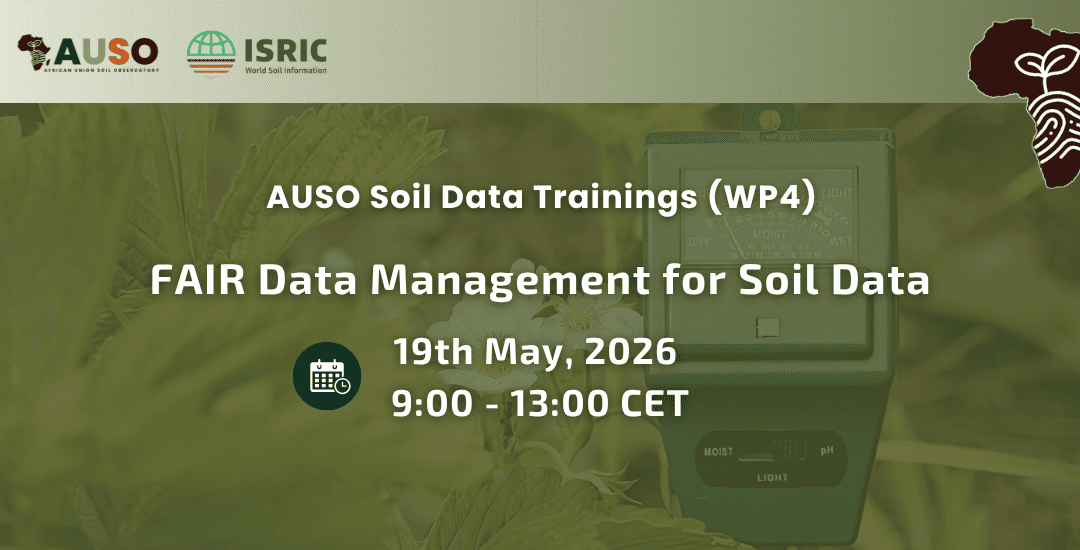
The African Union Soil Observatory (AUSO) project will host an online training session on FAIR Data Management for Soil Data on 19th May 2026, from 11:00 to 15:00 (UTC+01:00; Amsterdam, Berlin, Bern, Rome, Stockholm, Vienna time).
The training is designed to strengthen participants’ practical understanding of how the FAIR principles — Findable, Accessible, Interoperable, and Reusable — can improve the quality, visibility, accessibility, and reuse of soil data.
Soil data is essential for addressing pressing global challenges, including climate change, food security, land degradation, and sustainable land management. However, the value of many soil datasets is often constrained by poor documentation, limited accessibility, and weak interoperability across systems and platforms. Applying FAIR principles helps ensure that soil data can be more easily discovered, shared, integrated, and reused by researchers, policymakers, practitioners, and institutions.
Organised within the scope of the AUSO project, the training will strengthen the data management practices required to support the successful development and use of the African Union Soil Observatory. It will provide participants with practical knowledge and hands-on experience in applying FAIR principles specifically to soil-related datasets.
The African Union Soil Observatory (AUSO) is a continental initiative to strengthen soil health monitoring, data integration, and evidence-based decision-making across Africa. Led by FARA and implemented in partnership with African and European partners, AUSO will establish the African Soil Data Centre (ASDAC) and a Soil Health Dashboard to support national soil information systems, policy development, investment planning, and sustainable land management.
By the end of the training, participants are expected to understand the relevance of FAIR principles to soil data, recognise common challenges in soil data management, explore soil-related datasets and publications in open repositories, apply basic FAIR practices to improve data sharing and reuse, identify suitable repositories for publishing soil data, and understand how controlled vocabularies support data discoverability and interoperability.
The training is particularly relevant for researchers and students working with soil data, data stewards and research support staff, environmental scientists and practitioners, and anyone interested in open science and responsible data management.
The AUSO project encourages all interested participants and partner institutions to take advantage of this opportunity to strengthen their capacity in FAIR data management and contribute to more open, interoperable, and impactful soil data systems.
Be part of this transformation by joining the AUSO Community and contributing to ongoing discussions on soil data, knowledge exchange, and sustainable land management: https://faraafrica.community/fara-net/auso/join